
Touro
A deep dive into transforming a high-density "data-dump" Alumni Page into a modular, segmented ecosystem that prioritizes alumni connection
MY ROLE
Conceptualization
Research
Usability testing
Design
TOOLS USED
Figma
Notion
NotebookLM
Nano Banana
DURATION
CONTEXT
THE INVISIBLE COMMUNITY
Imagine graduating with a cutting-edge tech degree, wanting to give back to your university only to find your school's alumni portal feels like a dusty filing cabinet.
My supervisor came up to me and stated that Touro Alumni Page was not doing well and had next to none interaction.
DEFINING THE PROBLEM
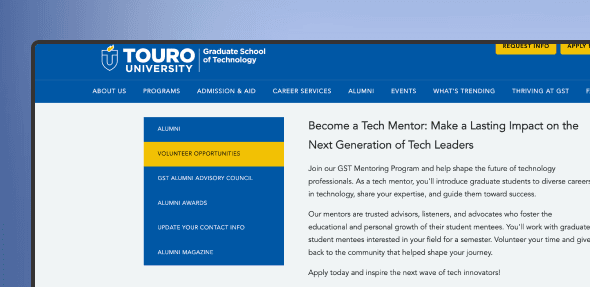
Text heavy and administrative feel to the website where all information are piled up in one page
Minimum Interaction on the website while 67% alumni were active on linkedIn
Not showcasing what Alumni actually want to see on the website.
RESEARCH
I interviewed 17+ alumni to understand their frustration with the current alumni page.
Simultaneoously, competetive research on 5 similar alumni pages of different universities were compared.
FINDINGS: BEFORE
MAJOR BARRIER

If the path to portal is invisible, the community is invisible
During my audit, I realized that the 'Time-to-Task' for an alum to simply find their portal was over 15 seconds. In digital terms, that’s an eternity. I hypothesized that increasing entry-point visibility would naturally increase traffic and interactivity.
This "hidden" placement of Alumni page was a major contributor to the low interactivity rates.
It signaled to graduating students that their relationship with Touro GST ended the moment they received their diploma.
When everything is priority, nothing is a priority
Previously, the alumni experience was a "Single-Page Dump." Users were met with a wall of text where Mentorship, Magazines, and Contact Forms competed for the same 5 seconds of attention which created high COGNITIVE LOAD

AFTER
DESIGN DECISION
STRATEGY 1
Deconstruction of Alumni Page
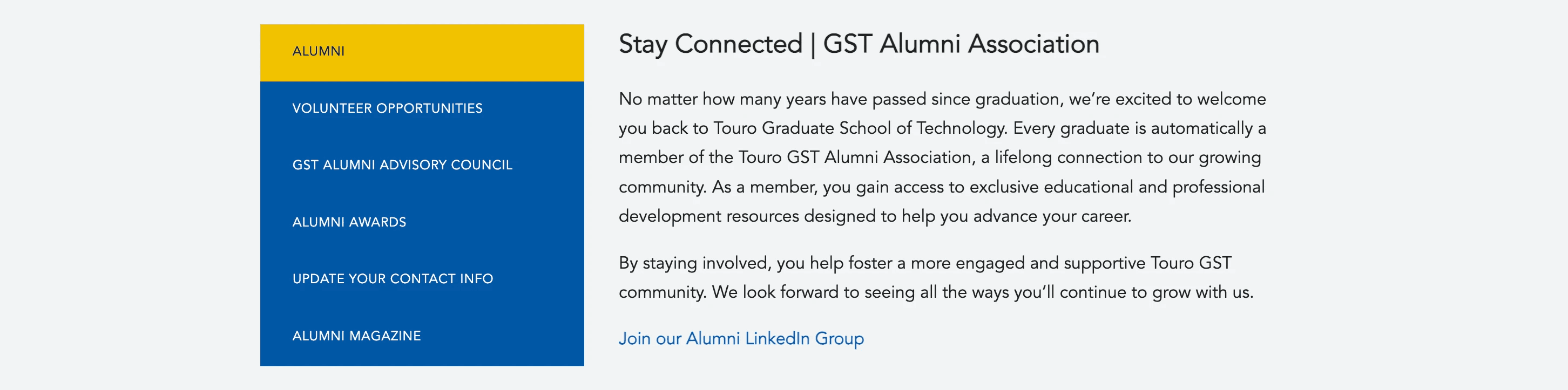
I deconstructed the "Mega-Page" and rebuilt it as a Categorized Ecosystem. By segmenting the content into distinct tabs/sections, I created a "Choose Your Own Adventure" experience for the Alum.
Usabilty testing
Test Scenario: Find the latest issue of the Alumni Magazine and tell us one headline.
Old Design: High "Pogo-sticking" (users scrolling up and down rapidly). Users felt "lost" in the text wall and missed the magazine link entirely 60% of the time.
New Design: With a dedicated tab, the Time-on-Page for the Magazine section increased by 3x. Users were more likely to click through to articles because the interface felt "calmer."
STRATEGY 2
Revamping the Information Architecture
I ensured the 'Alumni' link was placed in a high-value real estate area (the top mid quadrant), which is where users instinctively look for login or community portals.

Usabilty testing
Test Scenario: You are a graduate looking to join the Alumni Advisory Council. Find the application page."
Old Design: Users spent an average of 45 seconds clicking through secondary menus or using the search bar. 4 out of 10 users gave up.
New Design: Users located the section in under 5 seconds. 10 out of 10 users successfully reached the destination on the first click.
CONCLUSION
The redesign of the Touro GST Alumni portal was more than a visual refresh; it was a strategic overhaul of how the university engages with its greatest asset, its graduates. By moving the entrance to the Main Navigation and de-cluttering the experience through Segmentation, we didn't just make the site look better—we made it work.
Interactivity: Increased by 25%.
Efficiency: Reduced time-to-task for mentorship sign-ups by 60%.
REQUEST A CASESTUDY
Want to learn more about this project?
GET IN TOUCH